
Digital marketing is changing faster than ever before. Strategies that worked just a few years ago are already losing their impact. With new technologies, changing consumer behaviour, and smarter search engines, businesses must adapt or risk being left behind.
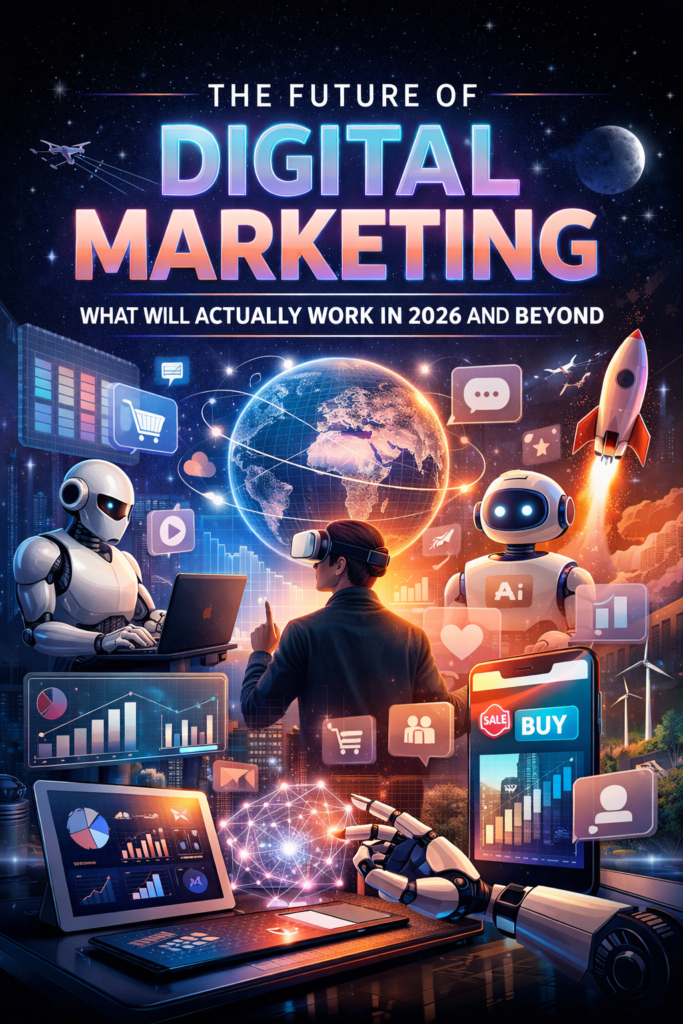
As we enter 2026 and beyond, digital marketing will focus less on spending money. It will be more about understanding people, data, and technology. This blog explores the strategies that will truly work in the future and help brands grow sustainably.
Artificial Intelligence Will Shape Every Marketing Decision
Artificial Intelligence (AI) is no longer a future concept it is already part of digital marketing. In the next few years, AI will have a bigger role. It will help us understand customer behavior, predict trends, and personalize content.
AI tools will help businesses:
• Analyse customer data more accurately
• Predict what users want before they search
• Create personalised ads and content
• Improve customer service through chatbots
However, AI will not replace human creativity. The brands that succeed will be those that combine AI efficiency with human emotions, storytelling, and trust.
Search Will Go Beyond Keywords
Traditional keyword-based SEO is evolving. Search engines are becoming smarter and more conversational. People now search using complete questions, voice commands, and even images.
In the future:
• Content must answer real user questions clearly
• Voice search optimisation will become essential
• Search engines will prioritise helpful, well-structured content
• Quality will matter more than keyword stuffing
Websites that offer real value, clear explanations, and reliable information will rank higher. This is better than sites that try to trick algorithms.
Content Will Focus on Value, Not Volume
Posting large amounts of content will no longer guarantee success. In 2026 and beyond, digital marketing will focus on meaningful and valuable content rather than frequent posting.
High-performing content will:
• Solve real problems
• Be easy to understand
• Build trust and authority
• Educate rather than just promote
Blogs, videos, and social posts that genuinely help people will attract loyal audiences and long-term growth.
Social Media Will Shift Towards Communities
Social media platforms are becoming more crowded and competitive. Simply posting promotional content will not work in the future.
Successful brands will:
• Build online communities, not just followers
• Focus on conversations and engagement
• Share relatable and honest content
• Use short-form videos effectively
People trust brands that feel human. Authenticity, consistency, and interaction will matter more than perfect visuals.
Data Privacy and Trust Will Become Critical
Consumers are becoming more aware of how their data is used. Strict data protection laws and rising privacy concerns mean businesses must be transparent and ethical.
Future-ready brands will:
• Respect user privacy
• Use first-party data responsibly
• Be honest about data usage
• Focus on trust-based marketing
Trust will be a major ranking factor both in search engines and in customers’ minds.
Personalisation Will Be Expected, Not Optional
Customers no longer want generic messages. They expect personalised experiences across websites, emails, and social media.
In the future:
• Websites will adapt content based on user behaviour
• Email marketing will be highly customised
• Ads will be more relevant and less intrusive
Personalisation will improve customer experience and increase conversion rates when done ethically and correctly.
Performance Marketing Will Focus on Long Term Growth
Digital marketing will move away from short term results and focus more on sustainable growth. Businesses will prioritise:
• Customer lifetime value
• Brand loyalty
• Organic traffic growth
• Quality leads over quantity
Smart marketers will invest in strategies that deliver consistent results over time, rather than quick wins.
Skills Will Matter More Than Tools
Tools will continue to evolve, but skills such as strategy, creativity, analysis, and communication will remain essential.
Future digital marketers must:
• Understand data and analytics
• Adapt quickly to change
• Learn continuously
• Think strategically
The ability to connect technology with human behaviour will be the most valuable skill.
Conclusion
The future of digital marketing is not just about following trends. It is about understanding people, using technology wisely, and building trust. In 2026 and beyond, success will come to those who focus on value, authenticity, and long-term relationships.
Businesses that adapt early, invest in learning, and focus on their audience will not just survive. They will thrive in the changing digital world.